
The Heart That Won't Keep Rhythm: Why Your "Skipped Beats" can be dangerous
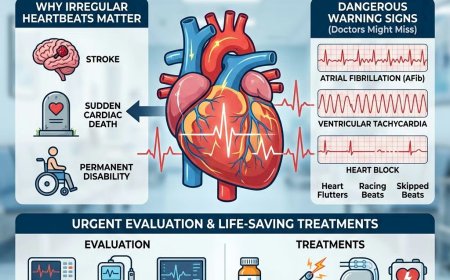
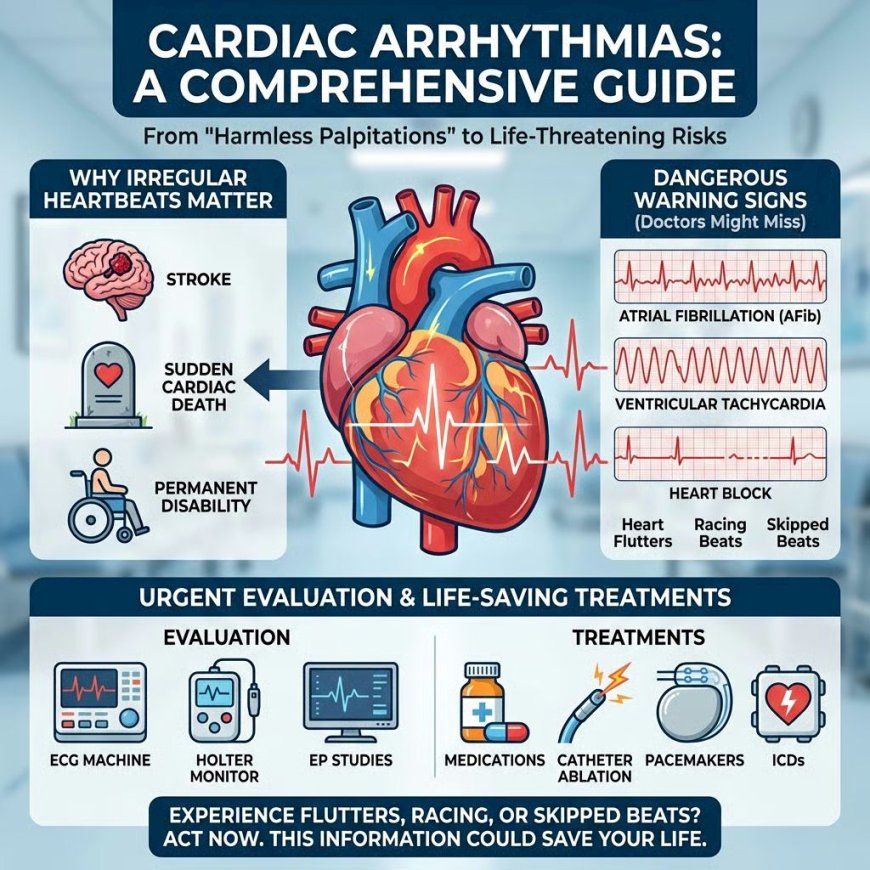
Cardiac arrhythmias—abnormal heart rhythms—affect millions but are often dismissed as "just stress" or "harmless palpitations." This comprehensive guide reveals why irregular heartbeats can cause stroke, loss of consciousness, permanent disability and sudden cardiac death. Learn the warning signs of dangerous arrhythmias like atrial fibrillation (AFib), ventricular tachycardia, and heart block that doctors might miss. Discover which palpitations are benign and which require evaluation with ECG, Holter monitoring, and electrophysiology studies. Understand life-saving treatments including medications, catheter ablation, pacemakers, and ICDs. If you experience heart flutters, racing, or skipped beats—this information could save your life before it's too late.

The Heart That Won't Keep Rhythm: Why Your "Skipped Beats" Can be Dangerous
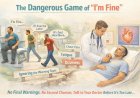
Your heart just did it again. That flutter. That skip. That weird pause that made you catch your breath.
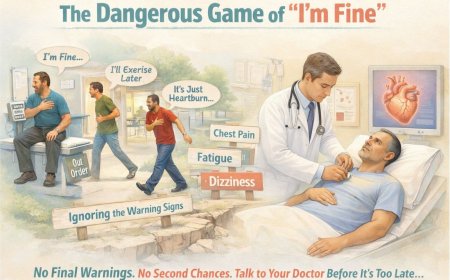
"It's nothing," you tell yourself. "Just stress. Too much coffee. I'm fine."
You felt it last week. And the week before. Sometimes it happens multiple times a day.
Sound familiar?
Here's the uncomfortable truth: Your heart doesn't rehearse its final performance before it stops.
The Dangerous Rhythm You're Ignoring
Right now, as you read this, millions of Indians are walking around with hearts that beat irregularly. Not because they don't know something feels wrong - they feel it every time their heart skips, races, or stutters.
They're dangerous because they've convinced themselves it's harmless.
"My grandmother had palpitations her whole life." "It only happens when I'm stressed." "If it was serious, it would hurt."
Until one day, that irregular heartbeat triggers a stroke. Or sudden cardiac death. Or you collapse without warning.
Then YOU become that statistic you read about in the newspaper.
What Your Heart Is Screaming (But You're Dismissing)
Let me paint you a picture of what's happening inside your chest right now if you're experiencing irregular heartbeats:
The First Flutter: False Security
Your heart skips a beat. Maybe two. You feel it - that uncomfortable sensation in your chest, like your heart stumbled. It passes. You forget about it. Everything seems fine.
Weeks to Months: The Pattern Emerges
It happens more often now. Sometimes when you're resting. Sometimes after exercise. Sometimes for no reason at all. You've learned to live with it. "It's just how my heart is," you tell people.
The Silent Danger Brewing
What you don't know: Every time your heart beats irregularly, blood isn't pumping efficiently. In some chambers, blood pools. It can form clots. Those clots are ticking time bombs traveling through your bloodstream, waiting to block an artery.
The Catastrophe
If the clot reaches your brain: Massive stroke. Paralysis. Speech loss. Permanent disability.
If your irregular rhythm suddenly accelerates: Atrial fibrillation with uncontrolled rates. Your heart quivers uselessly. resulting in reduced blood flow out of your heart.
If the rhythm disturbance causes prolonged pauses: Sudden fainting. You could be driving. Climbing stairs. Holding your grandchild.
If the rhythm disturbance originates from your heart's ventricles: Ventricular tachycardia or fibrillation. Your heart stops beating and if long enough can result in loss of consciousness and even death.
The terrifying part? Your heart might give you hundreds of "harmless" skipped beats before the one that kills you or disables you for life.
A Real Story That Should Terrify You
Priya, 58, Delhi homemaker. Palpitations for 3 years. Heart would occasionally race for a few minutes, then return to normal.
"It's just anxiety," her family doctor said. She believed him. Never got it checked properly.
Last Tuesday, she was cooking dinner. Suddenly felt dizzy. Her heart was racing at 180 beats per minute. Wouldn't stop.
Her daughter called an ambulance.
In the emergency room, doctors discovered she'd been in atrial fibrillation (AFib) all along. During the rapid heart rate episode, a blood clot had formed. It traveled to her brain.
Massive stroke. Left side completely paralyzed. Can't speak clearly. Can't return to her kitchen. Can't live independently ever again.
Her last words before the stroke? "It's just palpitations. Everyone gets them."
The Mathematics of Deadly Rhythms: Numbers That Should Scare You
Let me show you statistics that should genuinely frighten you:
Atrial Fibrillation (AFib):
- Increases stroke risk by 500%
- Causes 1 in 5 strokes in India
- Over 30% of cases produce NO symptoms until the stroke happens
- 20-25% of stroke victims have AFib they didn't know about
Ventricular Tachycardia/Fibrillation:
- Causes 80% of sudden cardiac deaths
- Can kill within 3-5 minutes
- The first symptom is often sudden collapse
- Survival rate without immediate defibrillation: less than 10%
Heart Block (Complete AV Block):
- Can cause sudden fainting without warning
- Brain damage can occur within 3-4 minutes of cardiac arrest
- Can progress from mild to complete block suddenly
Think about that for a moment. Your "harmless palpitations" could be the warning sign of a rhythm disorder that causes stroke or sudden death.
Are you willing to bet your life that yours are the harmless kind?
The Three Deadly Lies You Tell Yourself
Lie #1: "If It Was Serious, It Would Hurt"
The Brutal Truth: The most dangerous arrhythmias often produce minimal symptoms or none at all.
- Atrial fibrillation can be completely silent - no palpitations, no chest pain, nothing. The first symptom is the stroke.
- Many patients with life-threatening ventricular tachycardia feel "just palpitations" until they suddenly collapse.
- Pain is NOT a reliable indicator of danger with heart rhythm problems.
Lie #2: "It Comes and Goes, So It Can't Be Serious"
The Brutal Truth: The fact that it comes and goes makes it MORE dangerous, not less.
- Paroxysmal (intermittent) atrial fibrillation still dramatically increases your stroke risk even during the times when you're in normal rhythm.
- Your heart doesn't need to be in AFib at the moment of the stroke - the clots formed during previous episodes can strike later.
- Intermittent ventricular arrhythmias can suddenly become sustained, life-threatening rhythms without warning.
Lie #3: "Young People Don't Get Dangerous Heart Rhythm Problems"
The Brutal Truth: Sudden cardiac death from arrhythmias kills apparently healthy young people regularly.
- Athletes collapse on the field. Young parents die in their sleep. Teenagers drop dead at school.
- Conditions like Long QT Syndrome, Brugada Syndrome, Hypertrophic Cardiomyopathy, and WPW Syndrome don't check your age before they kill you.
- Youth is NOT protection. It just makes the tragedy more shocking.
What Actually Happens During Cardiac Arrest From Arrhythmia (The Reality No One Talks About)
Since you think "my palpitations are harmless," let me describe what your irregular heartbeat can lead to:
Second 0: Your heart suddenly switches from its irregular-but-functioning rhythm to ventricular fibrillation - chaotic, useless quivering. No blood pumps.
Second 10: You feel dizzy. Confused. Something is terribly wrong.
Second 15: You collapse. No warning. No time to call for help. You're unconscious.
Second 30: Your brain is being deprived of oxygen. Brain cells are dying.
Minute 1: If you're lucky, someone sees you collapse and calls for help. If you're home alone, in the bathroom, or sleeping - no one knows yet.
Minute 3: Without CPR or defibrillation, your chance of survival drops by 10% every minute. You're now at 70% chance of death.
Minute 5: Brain damage is occurring. Even if revived, you may never be the same person.
Minute 10: Without intervention, you're dead. Your family gets that phone call. Your children are told, "Papa/Mamma is gone."
All of this because you ignored those "harmless" irregular heartbeats.
The Types of Arrhythmias (And Why Each One Matters)
1. Atrial Fibrillation (AFib) - The Silent Stroke Maker
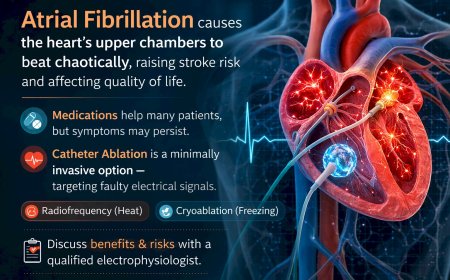
What it is: The upper chambers of your heart quiver chaotically instead of beating effectively.
What it feels like:
- Rapid, irregular heartbeat
- Fluttering in chest
- Fatigue, weakness
- Sometimes NO symptoms at all
Why it's deadly:
- Blood pools in the heart chambers
- Forms clots
- Clots travel to brain → stroke
- 5x increased stroke risk
- Can also cause heart failure over time
The scary part: You can have AFib and feel completely normal.
2. Ventricular Tachycardia (VT) - The Sudden Death Rhythm
What it is: The lower chambers beat dangerously fast (>100 bpm, often 150-250 bpm), unable to pump blood effectively.
What it feels like:
- Rapid pounding in chest
- Dizziness, lightheadedness
- Shortness of breath
- May cause immediate collapse
Why it's deadly:
- Can degenerate into ventricular fibrillation within seconds
- Causes sudden cardiac death
- Minutes to live without treatment
- Often occurs in people with previous heart damage
The scary part: Can occur without any warning signs.
3. Ventricular Fibrillation (VFib) - The Killer
What it is: The heart's lower chambers quiver uselessly. No blood pumps. This IS cardiac arrest.
What it feels like: You don't feel it. You collapse and lose consciousness immediately.
Why it's deadly:
- This IS death unless immediately treated
- Requires immediate defibrillation (shock)
- Brain death occurs within 4-6 minutes
- Survival rate without immediate intervention: <5%
The scary part: Often the FIRST symptom of underlying heart disease. No warnings.
4. Heart Block - The Pause That Could Be Permanent
What it is: Electrical signals from upper to lower heart chambers are delayed or blocked completely.
What it feels like:
- Fatigue, weakness
- Dizziness or fainting
- Slow heart rate
- Chest discomfort
Why it's dangerous:
- Complete heart block can cause sudden cardiac arrest
- Can progress from mild to severe without warning
- Causes fainting - dangerous if driving, on stairs, etc.
- Requires pacemaker implantation
The scary part: Can worsen suddenly, leading to collapse.
5. Supraventricular Tachycardia (SVT) - The "Harmless" One That Isn't Always
What it is: Rapid heart rate (150-250 bpm) originating above the ventricles.
What it feels like:
- Sudden rapid heartbeat
- Pounding sensation in chest, neck
- Dizziness, anxiety
- Usually stops suddenly on its own
Why it matters:
- Can last hours, eventually causing heart failure
- Can trigger more dangerous rhythms
- Severely impacts quality of life
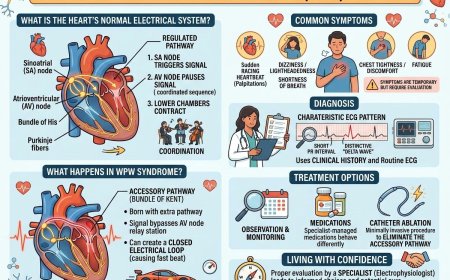
- Some types (WPW) can cause sudden death
The scary part: Most people are told "it's not dangerous" - but some forms can be life-threatening.
6. Premature Beats (PVCs/PACs) - When to Worry
What it is: Extra heartbeats that occur earlier than the normal rhythm.
What it feels like:
- Heart "skipping" or "fluttering"
- Sensation of strong beat after the pause
- Usually brief, can be frequent
Why it usually doesn't matter (but sometimes does):
- Isolated PVCs/PACs are usually benign
- BUT: Frequent PVCs (>10,000/day) can weaken heart
- Can be sign of underlying heart disease
- Pattern matters - certain patterns are dangerous
The scary part: You can't tell if yours are the harmless kind or the warning sign of something deadly without proper testing.
Why Your Brain Won't Let You Take This Seriously (The Psychology of Denial)
There are actual psychological reasons why you're dismissing your symptoms:
1. Intermittency Bias
Your brain thinks: "If it goes away on its own, it can't be serious."
This is fatally wrong with arrhythmias. The most dangerous ones often come and go.
2. Normalization
You've felt these palpitations so many times that your brain has categorized them as "normal for me."
This is your brain trying to reduce anxiety - but it's putting you in danger.
3. Symptom Misattribution
"It's just stress." "Too much coffee." "Didn't sleep well."
You've created plausible alternative explanations that prevent you from seeking medical help.
4. Fear Avoidance
You're actually terrified of finding out something is seriously wrong, so your mind protects you with denial.
"If I don't get it checked, I don't have to face bad news."
But here's the thing: Denial doesn't prevent strokes or sudden death. It just guarantees you won't be prepared when catastrophe strikes.
The Five Questions That Should Keep You Up Tonight
Ask yourself these questions with complete honesty:
1. If you collapsed tomorrow from a fatal arrhythmia, is your family prepared?
- Have you had "the conversation"?
- Do they know your wishes? Your passwords? Your insurance details?
- Are they financially protected?
2. If you have a stroke and can't speak or move, who will care for you?
- Your spouse? Your children?
- Will they give up their careers to be your caregiver?
- Can they afford it?
3. Are you ready to live with permanent disability at 45, 50, or 60?
Stroke survivors often live for years - paralyzed, unable to work, completely dependent. Is that the life you're choosing by ignoring these symptoms?
4. How will you feel watching life pass you by from a hospital bed?
Your children's graduations. Their weddings. Your grandchildren. All viewed from a wheelchair or hospital bed, if you survive the stroke at all.
5. What will your last thought be if you suddenly collapse?
Victims of sudden cardiac arrest often have a moment of realization: "This is it. Why didn't I get those palpitations checked?"
Can you live with that being your last thought?
The Choice (And Make No Mistake - It IS a Choice)
Every single day you ignore your symptoms, you're making a choice.
You have two clear paths:
Path A: Continue the Denial
- Dismiss the palpitations as "nothing"
- Avoid doctors and testing
- Hope you're one of the lucky ones with harmless palpitations
- Risk stroke, sudden death, permanent disability
- Leave your family's future to chance
- Roll the dice with your life every single day
This path feels easier today. But the price you pay could be catastrophic.
Path B: Wake Up RIGHT NOW
- Take your symptoms seriously
- Get proper cardiac evaluation - ECG, Holter monitor, echo, cardiology evaluation including possible EP study
- Receive accurate diagnosis
- Start appropriate treatment (medications, ablation, pacemaker, ICD)
- Dramatically reduce your stroke and sudden death risk
- Be there for your children's futures
- Watch your grandchildren grow
- Live without constant fear
- Add 20-30 healthy years to your life
This path requires effort today. But it gives you tomorrow, and thousands more tomorrows.
Which path are you choosing RIGHT NOW by reading this and planning to do nothing?
Your Heart's Warning Signs (Are You Ignoring These?)
Your heart has been trying to warn you. Check if you've dismissed any of these signals:
Palpitation Red Flags:
✓ Heart feels like it's racing, fluttering, or skipping ✓ Palpitations last more than a few seconds ✓ Episodes are becoming more frequent ✓ Associated with dizziness, lightheadedness, or near-fainting ✓ Accompanied by chest discomfort, shortness of breath, or sweating ✓ Occur during exercise or physical activity ✓ Wake you from sleep
Other Warning Signs:
✓ Unexplained fainting or near-fainting episodes ✓ Sudden onset of weakness or fatigue ✓ Feeling like your heart is "pounding" in your chest or neck ✓ Sudden anxiety or feeling of impending doom during episodes ✓ Family history of sudden cardiac death
If you checked even ONE box, you need a cardiac evaluation. If you checked THREE or more, you need it URGENTLY.
Ignoring these is like ignoring smoke alarms because you don't see flames yet.
What You MUST Do Today (Not Tomorrow, Not Next Week - TODAY) if Having Palpitations
Stop reading. Take action right now.
Here's your immediate action plan:
1. Check Your Pulse RIGHT NOW
- Place two fingers on your wrist or neck
- Count beats for 60 seconds
- Note if it's regular or irregular
- Normal: 60-100 bpm, regular rhythm
- If irregular, very fast (>100), or very slow (<50) - you need evaluation
2. Document Your Symptoms TODAY
Write down:
- When palpitations occur
- How long they last
- What triggers them
- Associated symptoms
- How often they happen
3. Book a Cardiologist Appointment THIS WEEK
Not next month. Not after the festival season. THIS WEEK.
4. Essential Tests You Need:
ECG (Electrocardiogram):
- Records heart rhythm
- Takes 5 minutes
- Essential first test
- May catch the arrhythmia if you're having it during the test
24-48 Hour Holter Monitor:
- Wearable device that records your heart continuously
- Catches arrhythmias that come and go
- Most important test for intermittent palpitations
- Shows exactly what rhythm you're in when symptoms occur
Echocardiogram:
- Ultrasound of your heart
- Checks for structural problems that cause arrhythmias
- Evaluates heart function
Event Monitor (if needed):
- Worn for days to weeks
- You press a button when symptoms occur
- Captures the actual rhythm during your symptoms
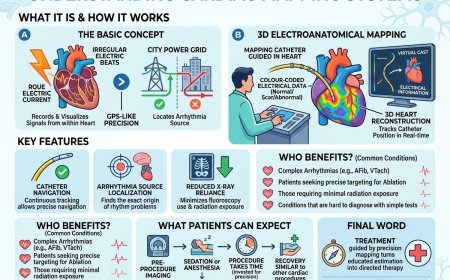
Electrophysiology Study (EP Study) - if indicated:
- Invasive test done in hospital
- Maps your heart's electrical system
- Identifies exact source of arrhythmia
- Can often treat the problem during the same procedure
5. If You Have Warning Signs, Don't Wait
If you experience:
- Palpitations with chest pain
- Palpitations with loss of consciousness
- Sustained rapid heart rate (>150 bpm)
- Severe dizziness or difficulty breathing
GO TO EMERGENCY ROOM IMMEDIATELY. Don't drive yourself.
The Financial Reality Check
Let's talk money, because financial concerns often prevent people from seeking care:
Cost of Diagnosis (One-time):
- ECG: ₹300 - 1,000
- Holter Monitor (24-48 hours): ₹2,000 - 5,000
- Echocardiogram: ₹2,000 - 6,000
- Event Monitor: ₹5,000 - 15,000
- EP Study: ₹50,000 - 1,50,000
- Total diagnostic workup: ₹10,000 - 50,000
Cost of Treatment (varies by type):
Medications (annual):
- Antiarrhythmics: ₹10,000 - 30,000
- Blood thinners for AFib: ₹5,000 - 60,000
- Beta-blockers: ₹3,000 - 10,000
Procedures (one-time):
- Catheter ablation: ₹1,50,000 - 4,00,000
- Pacemaker implantation: ₹2,00,000 - 6,00,000
- ICD (defibrillator) implantation: ₹8,00,000 - 15,00,000
Cost of Ignoring It:
Stroke from untreated AFib:
- Emergency treatment: ₹2,00,000 - 10,00,000
- Rehabilitation: ₹50,000 - 2,00,000
- Lifetime care costs: ₹20,00,000 - 1,00,00,000+
- Lost income: Incalculable
- Family burden: Priceless
Sudden cardiac death:
- Emergency resuscitation attempts: ₹3,00,000 - 8,00,000
- ICU care if survived: ₹2,00,000 - 5,00,000 per week
- Brain damage rehabilitation: ₹10,00,000 - 50,00,000+
- If fatal: Your family loses you. No amount of money compensates.
Which is the smarter financial decision?
Treatment Options That Can Save Your Life
The good news: We have effective treatments for almost all arrhythmias.
For Atrial Fibrillation:
Rate/Rhythm Control Medications:
- Beta-blockers, calcium channel blockers
- Antiarrhythmic drugs
- Control heart rate and rhythm
Blood Thinners (Anticoagulants):
- Dramatically reduce stroke risk
- Newer agents (DOACs) safer than warfarin
- Essential for AFib patients
Catheter Ablation:
- 70-80% cure rate for paroxysmal AFib
- Burns or freezes abnormal electrical pathways
- One-time procedure in many patiewnts
- Can eliminate need for lifelong medications
Cardioversion:
- Electrical shock to restore normal rhythm
- Done under sedation
- Immediate results
For Ventricular Arrhythmias:
Medications:
- Antiarrhythmic drugs
- Beta-blockers
Catheter Ablation:
- Can cure certain VT types
- Especially effective for scar-related VT
ICD (Implantable Cardioverter-Defibrillator):
- Device implanted in chest
- Monitors heart rhythm 24/7
- Delivers shock if life-threatening rhythm detected
- Saves lives - this device will shock you back to life if your heart stops
- For high-risk patients - previous cardiac arrest, severe heart failure, certain genetic conditions
For SVT:
Vagal Maneuvers:
- Simple techniques (bearing down, coughing, ice water on face)
- Can stop some SVT episodes
Medications:
- Adenosine (emergency)
- Beta-blockers (prevention)
Catheter Ablation:
- 95-98% cure rate for most SVT types
- Permanent solution
- One-time procedure
- High success, low risk
For Heart Block:
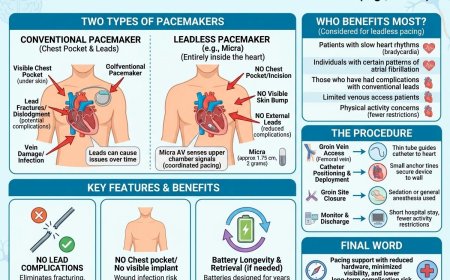
Pacemaker:
- Small device implanted under skin
- Ensures heart doesn't beat too slowly
- Prevents fainting and sudden death
- Lasts 7-15 years
- Normal life after implantation
The critical point: Treatment works. But only if you get diagnosed. And you can only get diagnosed if you stop ignoring your symptoms and see a cardiologist.
What Happens If You Close This Tab and Do Nothing?
Let me be brutally honest about what will happen:
In 2 weeks: You'll have forgotten this article. Back to dismissing the palpitations as "just stress."
In 3 months: Another scary episode. Maybe longer this time. You tell yourself it passed, so it's fine.
In 1 year: You've normalized the symptoms completely. "This is just how my heart is."
In 2-3 years: Your first major event. Maybe a stroke. Maybe you collapse without warning. Maybe you're driving with your family in the car.
Or:
You take action today. You get diagnosed. You receive appropriate treatment. In 2-3 years, you're healthy, active, watching your children grow, thinking "Thank God I listened."
The choice is genuinely yours. But the consequences aren't negotiable.
The Final Word: Your Heart's Message to You
If your heart could speak, here's what it would say:
"I've been beating for you 100,000 times a day since before you were born. I've never taken a break. Never called in sick. Never complained.
But something's wrong now. My electrical system is misfiring. I'm trying to tell you with these irregular beats, these skipped rhythms, these racing episodes.
Please listen this time.
I don't want to cause you a stroke. I don't want to suddenly stop beating. I don't want to leave you collapsed on the floor while your family screams for help.
But I can't fix myself. I need you to get me checked. Get me treated. Give me a chance to keep beating for you for decades more.
Because once I stop - if I stop suddenly - there's no rewind button. No second chances.
I've served you faithfully your entire life. Now I need you to take care of me.
Please. Before it's too late."
Your Next Step
You've read this entire article. That means somewhere inside, you know those palpitations aren't normal. You know you need to get checked. You know you're at risk.
The question is: Will you take action?
Or will you close this tab, go about your day, and continue hoping it's nothing?
Five years from now, you'll either be:
A) Grateful you read this and took action today - living a healthy, active life with properly managed or cured arrhythmia, watching your children grow, playing with grandchildren, traveling, working, living fully.
OR
B) Severely disabled from stroke, dependent on others for basic tasks, filled with regret, or worse - your family visiting your grave, saying "If only he/she had gotten those palpitations checked..."
Your heart doesn't care about your excuses. It only cares about electrical conduction, proper rhythm, and adequate blood flow.
The scariest part? After finishing this article, you'll probably go back to "it's just stress." You'll find reasons to delay. You'll convince yourself you're the exception.
Please. Don't.
Take Action Now
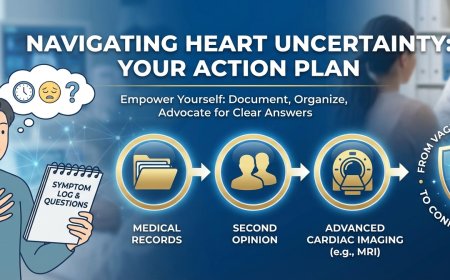
Step 1: Check your pulse right now
Step 2: Document your symptoms today
Step 3: Book a cardiology appointment this week
Step 4: Get an ECG and Holter monitor
Step 5: Follow treatment recommendations
Don't delay. Don't wait for "worse" symptoms. Don't hope it goes away.
If you're experiencing cardiac symptoms, unexplained palpitations, irregular heartbeat, or any concerns about heart rhythm disorders, don't delay—speak to a qualified cardiologist today.
Connect with experienced U.S.-based heart specialists for a comprehensive second opinion consultation to learn more about your arrhythmia and available treatment options:
👉 https://myamericandoctor.com/our-doctors/
You can also enroll in our soon-to-be-launched concierge medical clinic in India, Global Concierge Doctors. We provide comprehensive, US-style primary care with 24/7 access to India-based physicians to discuss any health concerns. Furthermore, we facilitate expert referrals to local Indian specialists and, if needed, US-based specialists to evaluate and manage your cardiac rhythm disorders.
Your symptoms are warning signs. The tests exist. The treatments work.
Now the only question is: Will YOU act before it's too late?
Your heart is begging you to find out what's wrong. Are you listening?
Do you even know if your palpitations are harmless? Or are they your heart's final warning before the stroke or sudden death?
The tests are waiting for you. The question is: Will you be in time?
Written with the hope of preventing strokes and saving lives. Share it forward. You might save someone you love.
Reader Poll
What's your experience with heart rhythm problems?
- I have palpitations but haven't seen a doctor
- I've had palpitations checked and they were "benign"
- I'm currently being treated for an arrhythmia
- I had a serious arrhythmia event that could have been prevented
- Someone I know had sudden cardiac death from an arrhythmia
Share in the comments. Your story might save someone's life.
Share This Article
Know someone who:
- Complains of palpitations or irregular heartbeat?
- Has "anxiety" that might actually be arrhythmia?
- Dismisses their heart symptoms as "nothing"?
- Has a family history of sudden cardiac death?
Share this article with them immediately.
That share could save their life. Sometimes a wake-up call from an outside source hits harder than family concern. You might literally prevent a stroke or sudden death by clicking "share."
Medical Disclaimer
This article is provided strictly for educational, informational, and awareness purposes only. It is not intended to be, and should not be construed as, professional medical advice, diagnosis, treatment, or a substitute for consultation with qualified healthcare professionals.
No Doctor-Patient Relationship
The information presented in this article does not establish a doctor-patient relationship between the reader and the author, publisher, or any affiliated entities. No medical decisions should be made based solely on the content of this article.
Consult Qualified Medical Professionals
If you are experiencing cardiac symptoms, chest pain, shortness of breath, palpitations, dizziness, fainting, or any other health concerns mentioned in this article, seek immediate consultation with qualified cardiologists, electrophysiologists, or appropriate medical specialists.
For medical emergencies (chest pain, loss of consciousness, sustained rapid heart rate), contact emergency services immediately.
Individual Medical Situations Vary
Every person's medical condition, health history, risk factors, and circumstances are unique. Diagnostic tests, treatment options, and medical recommendations must be tailored to individual patients through direct consultation with licensed healthcare providers who have access to complete medical histories and can perform proper clinical evaluations.
Not a Recommendation for Specific Tests or Treatments
References to ECG, Holter monitors, echocardiograms, electrophysiology studies, catheter ablation, pacemakers, ICDs, or any other diagnostic procedures or treatments in this article are for informational purposes only and do not constitute recommendations that you should or should not undergo these tests or procedures. All decisions regarding medical testing, diagnosis, and treatment should be made in consultation with qualified healthcare professionals based on your specific medical situation.
No Guarantee of Accuracy or Completeness
While efforts have been made to provide accurate information, medical knowledge continuously evolves. The information in this article may not reflect the most current research, clinical guidelines, or medical practices. The author and publisher make no representations or warranties regarding the accuracy, completeness, or timeliness of the content.
Do Not Disregard or Delay Professional Medical Advice
Never disregard, avoid, or delay obtaining professional medical advice from qualified healthcare providers because of something you have read in this article. If you have questions or concerns about information presented here, discuss them with your personal physician or cardiologist.
Third-Party Resources and Links
Any references to third-party medical services, clinics, doctors, or external websites are provided for informational purposes only and do not constitute endorsements. The author and publisher are not responsible for the content, services, or practices of any third-party entities.
Limitation of Liability
To the fullest extent permitted by law, the author, publisher, and affiliated entities disclaim all liability for any direct, indirect, incidental, consequential, or punitive damages arising from the use of, or reliance on, information contained in this article. This includes, but is not limited to, medical complications, financial losses, or any other adverse outcomes.
Geographic and Regulatory Considerations
Medical regulations, standards of care, insurance coverage, and availability of diagnostic tests vary by country, region, and healthcare system. Information regarding costs, procedures, and medical practices may not be applicable to all geographic locations or healthcare settings.
Your Responsibility
You acknowledge that you are solely responsible for your own health decisions and that you will consult with appropriate licensed healthcare professionals before making any medical decisions or undergoing any diagnostic tests or treatments.
Acknowledgment
By reading and using the information in this article, you acknowledge that you have read, understood, and agreed to this disclaimer in its entirety.
Last Updated: 30th January 2026
Related Articles You Should Read:
- Understanding Atrial Fibrillation: The Silent Stroke Maker
- Sudden Cardiac Death: Risk Factors You Can't Ignore
- When Palpitations Are Dangerous: Red Flags You Must Know
- Life with an ICD: What to Expect After Defibrillator Implantation
What's Your Reaction?
 Like
0
Like
0
 Dislike
0
Dislike
0
 Love
0
Love
0
 Funny
0
Funny
0
 Angry
0
Angry
0
 Sad
0
Sad
0
 Wow
0
Wow
0